Boiler Rental Companies
November 26, 2026
Why Boiler Rental Companies Should Be Part of Your Contingency Plan
A boiler breakdown can disrupt far more than a facility's heating system. For businesses that depend on continuous steam, heat, or hot water, unexpected equipment failure can affect production schedules, building operations, and essential services. Although repairs may resolve the problem, getting operations back to normal can take time. This is why boiler rental companies should be part of a facility's contingency planning before an emergency occurs.
Having a temporary heating strategy in place allows businesses to explore suitable equipment and support arrangements without making rushed decisions during an outage.
1. Understand What Is at Stake When a Boiler Fails
The impact of boiler failure depends on how heavily a facility relies on its heating system. In some buildings, the immediate concern may be maintaining indoor temperatures. In industrial environments, losing access to steam or hot water can affect processes that depend on consistent thermal output.
Consider the potential consequences:
- Production interruptions: Manufacturing processes may need to slow down or stop when steam becomes unavailable.
- Building operations: Commercial and institutional facilities may struggle to maintain required heating conditions.
- Service disruptions: Operations that depend on hot water may experience difficulties maintaining normal schedules.
- Unplanned expenses: Emergency repairs, equipment replacement, and operational delays can place additional pressure on budgets.
Understanding these risks helps facility managers determine which systems require backup arrangements and how quickly temporary equipment may be needed.
2. Identify Warning Signs Before They Become Bigger Problems
Boiler failures are not always sudden. In some cases, declining performance and recurring maintenance issues provide opportunities to review equipment condition and prepare for possible downtime.
Facility managers should pay attention to:
- Repeated component failures or repair requirements.
- Unusual changes in operating performance.
- Increasing maintenance demands.
- Difficulty obtaining replacement parts.
- Equipment approaching a planned replacement or major upgrade.
Maintenance records can help identify recurring issues that deserve further investigation. These signs do not guarantee an imminent breakdown, but they provide a reasonable basis for reviewing contingency arrangements.
If an existing boiler is nearing the end of its service life, businesses can also begin evaluating temporary heating requirements alongside their replacement plans.
3. Determine How Much Temporary Capacity Your Facility Needs
One of the most important parts of contingency planning is understanding what a temporary boiler must accomplish. Simply having access to a rental unit does not guarantee that it will meet your facility's operating requirements.
Start by documenting the specifications of your existing system and the demands of the processes it supports.
Key considerations include:
- Output requirements: Establish the heating, steam, or hot water capacity needed to support essential operations.
- Operating pressure: Identify the pressure requirements of connected systems and equipment.
- Fuel compatibility: Determine which fuel sources are available and suitable for the temporary installation.
- Connection requirements: Review existing piping, electrical connections, and available installation space.
- Rental duration: Estimate how long temporary equipment might be required, including potential repair or replacement delays.
Sharing these details with boiler rental providers ahead of time makes it easier to discuss suitable equipment and identify potential installation challenges.
4. Prepare for the Practicalities of a Temporary Installation
A contingency plan should account for more than equipment specifications. Working with boiler rental companies ahead of time can help facilities identify site-specific installation requirements and prepare for potential challenges before an emergency occurs. Mobile boiler installations involve several factors that can affect how quickly a temporary system becomes operational.
Before an emergency, review the following:
- Site accessibility: Confirm that delivery vehicles and mobile boiler trailers can reach the installation area.
- Supporting equipment: Determine whether fuel tanks, generators, gas boosters, or other accessories may be necessary.
- Permits and inspections: Identify applicable approval requirements and establish responsibility for obtaining them.
- Installation arrangements: Clarify who will handle connections, startup, and commissioning.
- Operational support: Understand the available maintenance, monitoring, and troubleshooting arrangements.
For businesses with facilities in multiple locations, nationwide boiler rental capabilities may also be relevant when developing a consistent contingency strategy.
5. Evaluate Rental Arrangements Before You Need Them
Waiting until an outage occurs to compare boiler rental companies can leave businesses with limited time to assess their options. Reviewing potential arrangements in advance allows facility managers to focus on practical details rather than making decisions under pressure.
During vendor selection, compare more than the quoted equipment rate.
Ask prospective providers about:
- Equipment availability and delivery arrangements.
- Emergency response and technical support.
- Installation and commissioning assistance.
- Maintenance responsibilities and monitoring.
- Rental extensions and associated charges.
Also clarify what is included in the agreement and which responsibilities remain with your facility. These details can help prevent unexpected costs and coordination problems once temporary equipment is deployed.
Build a More Prepared Boiler Contingency Plan With Boileroom Rentals
Equipment failure may be difficult to predict, but businesses can take practical steps to prepare for it. Reviewing boiler performance, documenting system requirements, and exploring temporary equipment options can make an unexpected outage easier to manage.
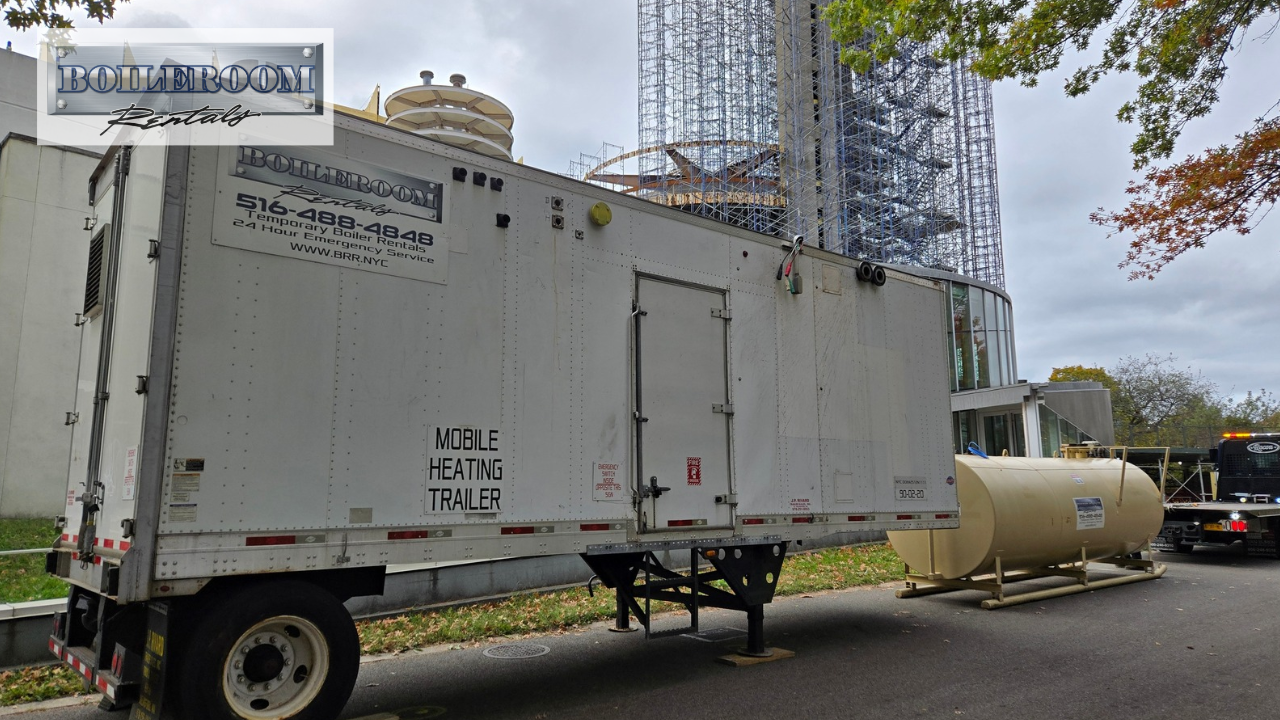
At Boileroom Rentals, we provide mobile boiler systems for emergency repairs, planned shutdowns, and other temporary heating requirements. Our equipment options include low-pressure steam, hydronic, and domestic hot water systems. We also offer supporting equipment, 24/7 emergency service, remote monitoring, preventative maintenance, and chemical treatment.
If your facility needs temporary heating or steam support, explore our boiler rental services and contact Boileroom Rentals to discuss your application and request a rental quote. Planning ahead today can help you respond more effectively when your permanent boiler system needs attention.
Need Temporary Heating Capacity?
From emergency failures to planned projects, we deliver mobile boiler systems with rapid setup and reliable performance.
Get a Rental Quote